
Lesson 38: So / Such / Too / Enough
So / Such / Too / Enough
Transcripción del vídeo con traducción
Lesson 38: So / Such / Too / Enough – Make Your English More Emotional
Lección 38: Tan / Tal / Demasiado / Suficiente – Haz que tu discurso sea más emocional
Hi! Welcome to Lesson 38 from LingTrio!
Hola, bienvenidos a la lección 38 de LingTrio !
Today, we’re going to learn some powerful little words that make your English more colorful and emotional:
Hoy vamos a aprender algunas palabras pequeñas pero muy expresivas que hacen que el discurso sea más vivo y emocional:
So / Such / Too / Enough
Tan / Tal / Demasiado / Suficiente
Why use So, Such, Too, Enough?
¿Por qué usamos «tan», «tal», «demasiado», «suficiente»?
These words help you:
Estas palabras te ayudan a:
Make your sentences stronger
Hacer que tus frases sean más expresivas
Show emotions
Transmitir emociones
Sound more natural in English
Hablar de manera más natural
Let's Learn Them One by One:
Veámoslas una por una:
SO
TAN
Use "so" before an adjective or adverb.
Usamos «tan» antes de un adjetivo o un adverbio.
(It means "very", "extremely".)
(Significa «muy», «extremadamente».)
Structure:
Estructura:
so + adjective
tan + adjetivo
so + adverb
tan + adverbio
Examples:
Ejemplos:
She is so beautiful.
Ella es tan hermosa.
The coffee is so hot.
El café está tan caliente.
He runs so quickly.
Él corre tan rápido.
SUCH
TAL
We use "such" before a noun (sometimes with an adjective).
Usamos «tal» antes de un sustantivo (a veces con un adjetivo).
Structure:
Estructura:
such + (adjective) + noun
tal + (adjetivo) + sustantivo
Examples:
Ejemplos:
It’s such a nice day!
Es un día tan bonito.
They are such good friends.
Son tan buenos amigos.
He told such an interesting story.
Contó una historia tan interesante.
TOO
DEMASIADO
We use "too" to show more than necessary — usually a problem.
Usamos «demasiado» para mostrar que hay más de lo necesario — normalmente un problema.
Structure:
Estructura:
too + adjective
demasiado + adjetivo
too + adverb
demasiado + adverbio
Examples:
Ejemplos:
This bag is too heavy. (I can’t carry it)
Este bolso es demasiado pesado. (No puedo llevarlo)
You are driving too fast! (Dangerous!)
Conduces demasiado rápido. (Peligroso)
ENOUGH
SUFICIENTE
We use "enough" to say that something is sufficient.
Usamos «suficiente» para decir que algo es bastante.
Structure:
Estructura:
enough + noun
suficiente + sustantivo
adjective + enough
adjetivo + suficiente
Examples:
Ejemplos:
We have enough money. (noun)
Tenemos suficiente dinero. (sustantivo)
She is strong enough to lift it. (adjective)
Ella es lo bastante fuerte para levantarlo. (adjetivo)
The sentences:
Ejemplos de oraciones:
She speaks so quickly that I can’t understand her.
Ella habla tan rápido que no puedo entenderla.
It’s such a funny story that I laughed for five minutes!
Es una historia tan divertida que me reí durante cinco minutos.
There aren’t enough plates for everyone at the table.
No hay suficientes platos para todos en la mesa.
It’s too late to catch the last bus.
Es demasiado tarde para coger el último autobús.
He’s such a kind person that everybody likes him.
Es una persona tan amable que todos la quieren.
I don’t have enough money to buy the new phone.
No tengo suficiente dinero para comprar el nuevo teléfono.
You are driving too fast — slow down!
Conduces demasiado rápido — reduce la velocidad.
This cake is so delicious! Can I have another piece?
Este pastel está tan delicioso. ¿Puedo comer otro trozo?
Más vídeos
 B1Lesson 39: Either / Neither / BothLesson 39: either / neither / both – Agree or Disagree Naturally Hi! Welcome to Lesson 39 from LingTrio! Today, we’re going to learn how to agree or disagree in a natural way using three simple words:
 B1Lesson 40: Present Perfect ContinuousLesson 40: Present Perfect Continuous – How long has it been going on? Today, we’re going to learn a very useful tense: Present Perfect Continuous Why do we use Present Perfect Continuous?
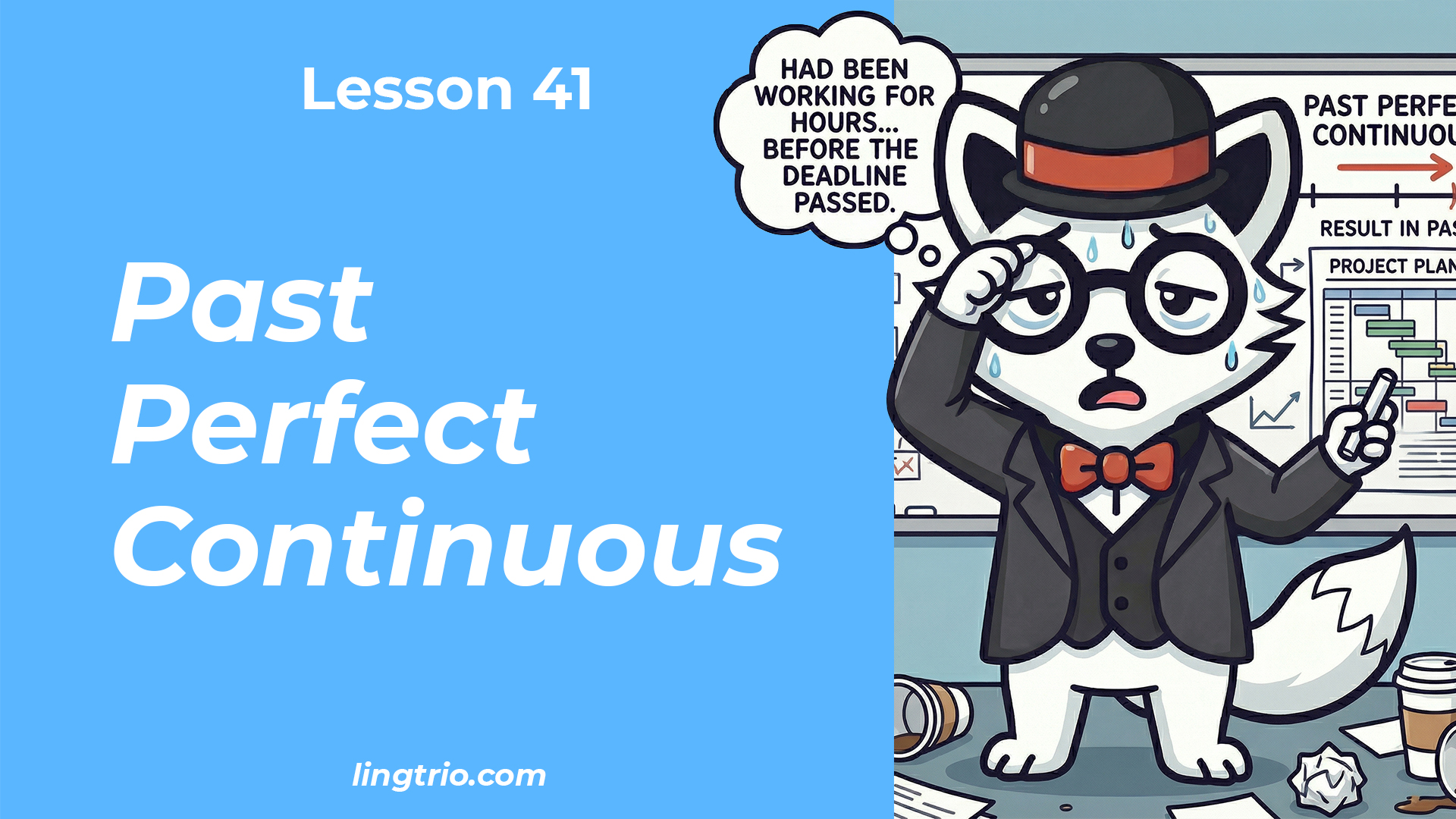 B1Lesson 41: Past Perfect ContinuousLesson 41: Past Perfect Continuous – What had been happening before? Today, we’re going to learn about another important tense: Past Perfect Continuous Why do we use Past Perfect Continuous?
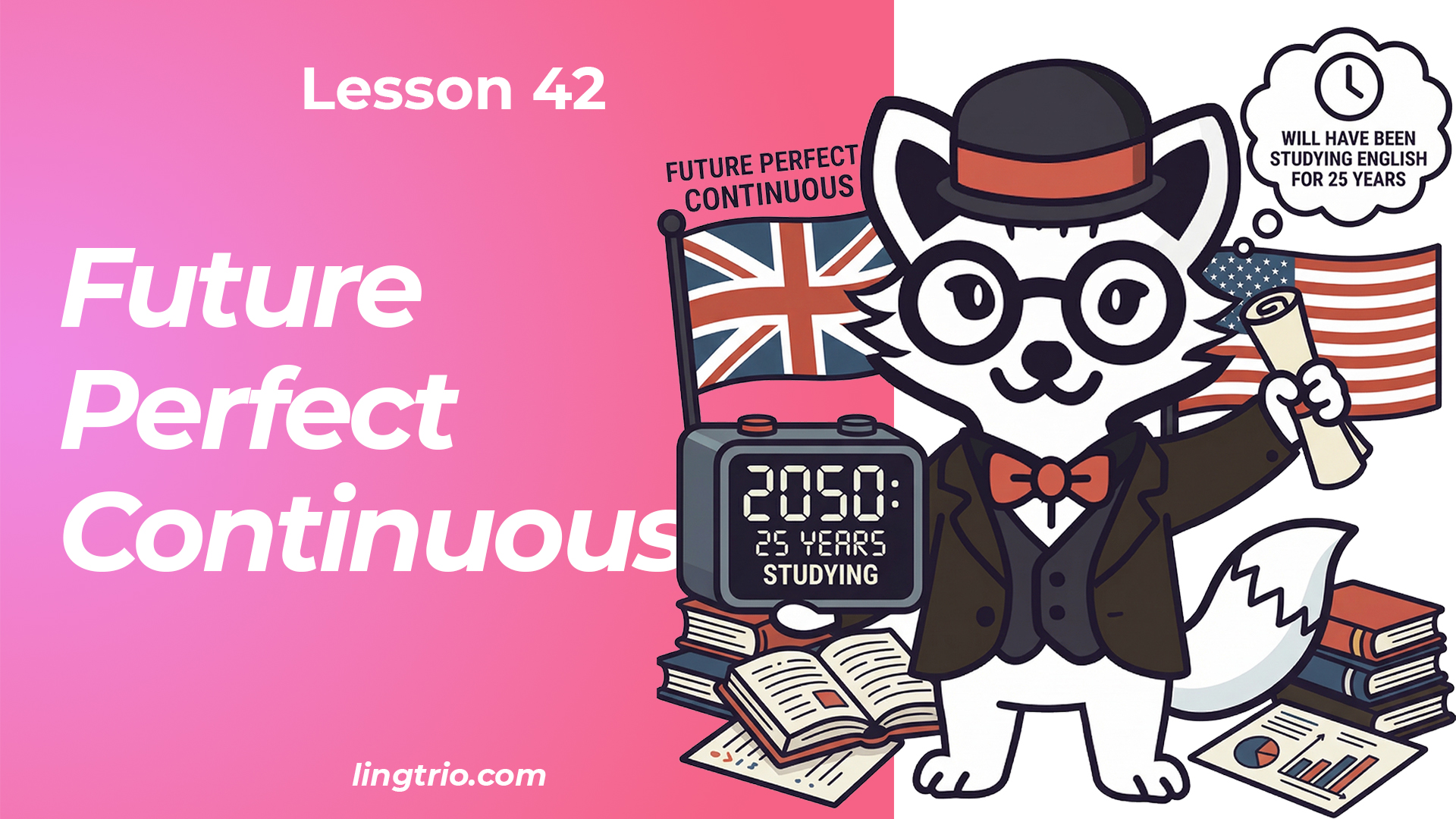 B1Lesson 42: Future Perfect ContinuousLesson 42: Future Perfect Continuous – How long will it have been happening? Welcome to Lesson 42 from LingTrio! Today, we’re going to learn another important tense: Future Perfect Continuous
 B1Lesson 43: All English TensesAll 12 Tenses with “I eat breakfast” — One idea, many meanings Today, you’ll learn how one simple idea — I eat breakfast — can be expressed in 12 different tenses with different meanings. Let’s go!
 B1Lesson 44: Question TagsToday, we’re going to learn how to make your English sound more natural with question tags. It’s easy and fun! Let’s go! What are Question Tags?