
Lesson 40: Present Perfect Continuous
B1Leçons
Present Perfect Continuous – I Have Been Working
Transcription de la vidéo avec traduction
Lesson 40: Present Perfect Continuous – How long has it been going on?
Leçon 40 : Présent parfait continu – Depuis combien de temps cela dure ?
Today, we’re going to learn a very useful tense:
Aujourd’hui, nous allons apprendre un temps très utile :
Present Perfect Continuous
Le présent parfait continu
Why do we use Present Perfect Continuous?
Pourquoi utilise-t-on ce temps ?
We use it to talk about:
On l’utilise pour parler :
Actions that started in the past and are still happening now
D’actions qui ont commencé dans le passé et qui continuent encore maintenant
Actions that have just stopped but you can see the result
D’actions qui viennent de se terminer mais dont le résultat est encore visible
It shows how long something has been happening.
Il montre depuis combien de temps quelque chose se produit.
How do we form it?
Comment se forme-t-il ?
have/has + been + verb-ing
forme have/has + been + verbe en -ing
Examples:
Exemples :
I have been learning English for two years. (It started in the past, still happening)
J’apprends l’anglais depuis deux ans. (Commencé dans le passé, continue maintenant)
She has been working all day. (She’s tired now — you can see the result)
Elle travaille toute la journée. (Elle est fatiguée — on voit le résultat)
They have been playing football for three hours.
Ils jouent au football depuis trois heures.
Key Words we use:
Mots clés :
for (a period of time) → for two hours, for a week
pendant (période de temps) → pendant deux heures, pendant une semaine
since (a point in time) → since Monday, since 2019
depuis (moment précis) → depuis lundi, depuis 2019
recently, lately
récemment, dernièrement
Negative / Question Forms:
Forme négative et forme interrogative :
Negative: have/has not been + verb-ing
Négatif : have/has not been + verbe en -ing
Example: He has not been working.
Exemple : Il n’a pas travaillé.
Question: Have/Has + subject + been + verb-ing?
Interrogatif : Have/Has + sujet + been + verbe en -ing ?
Example: Have you been waiting long?
Exemple : Tu attends depuis longtemps ?
More examples:
Autres exemples :
We have been waiting for 30 minutes.
Nous attendons depuis 30 minutes.
He has been sleeping for 10 hours.
Il dort depuis 10 heures.
Has she been cooking dinner?
Elle prépare le dîner ?
They haven’t been answering their phones.
Ils ne répondent pas au téléphone.
Present Perfect Continuous vs Present Perfect Simple vs Present Continuous
Comparaison avec d’autres temps :
Present Perfect Continuous – Duration of an action (how long)
Présent parfait continu – accent sur la durée de l’action (depuis combien de temps)
I have been studying for two hours.
J’étudie depuis deux heures.
Present Perfect Simple – Result of an action (what/how much)
Présent parfait – accent sur le résultat de l’action (ce qui a été fait, combien)
I have studied three chapters.
J’ai étudié trois chapitres.
Present Continuous – Action happening right now
Présent continu – action en cours maintenant
I am studying right now.
J’étudie en ce moment.
Present Perfect Continuous = Focus on duration (for, since)
Présent parfait continu = accent sur la durée (pendant, depuis)
Present Perfect Simple = Focus on result (already, yet, just)
Présent parfait = accent sur le résultat (déjà, encore, juste)
Present Continuous = Focus on the moment now (right now, at the moment)
Présent continu = accent sur le moment présent (en ce moment, actuellement)
Quick Practice – Complete the sentences:
Exercice rapide – complétez les phrases :
I have been studying (study) English for two years.
J’étudie l’anglais depuis deux ans.
She has been working (work) hard lately.
Elle travaille beaucoup dernièrement.
They have not been playing (not/play) football for a long time.
Ils ne jouent plus au football depuis longtemps.
Have you been waiting (wait) for me?
Tu m’attends ?
He has not been sleeping (not/sleep) well recently.
Il dort mal ces derniers temps.
Awesome work today! See you in the next lesson!
Excellent travail aujourd’hui ! À bientôt pour la prochaine leçon !
Plus de vidéos
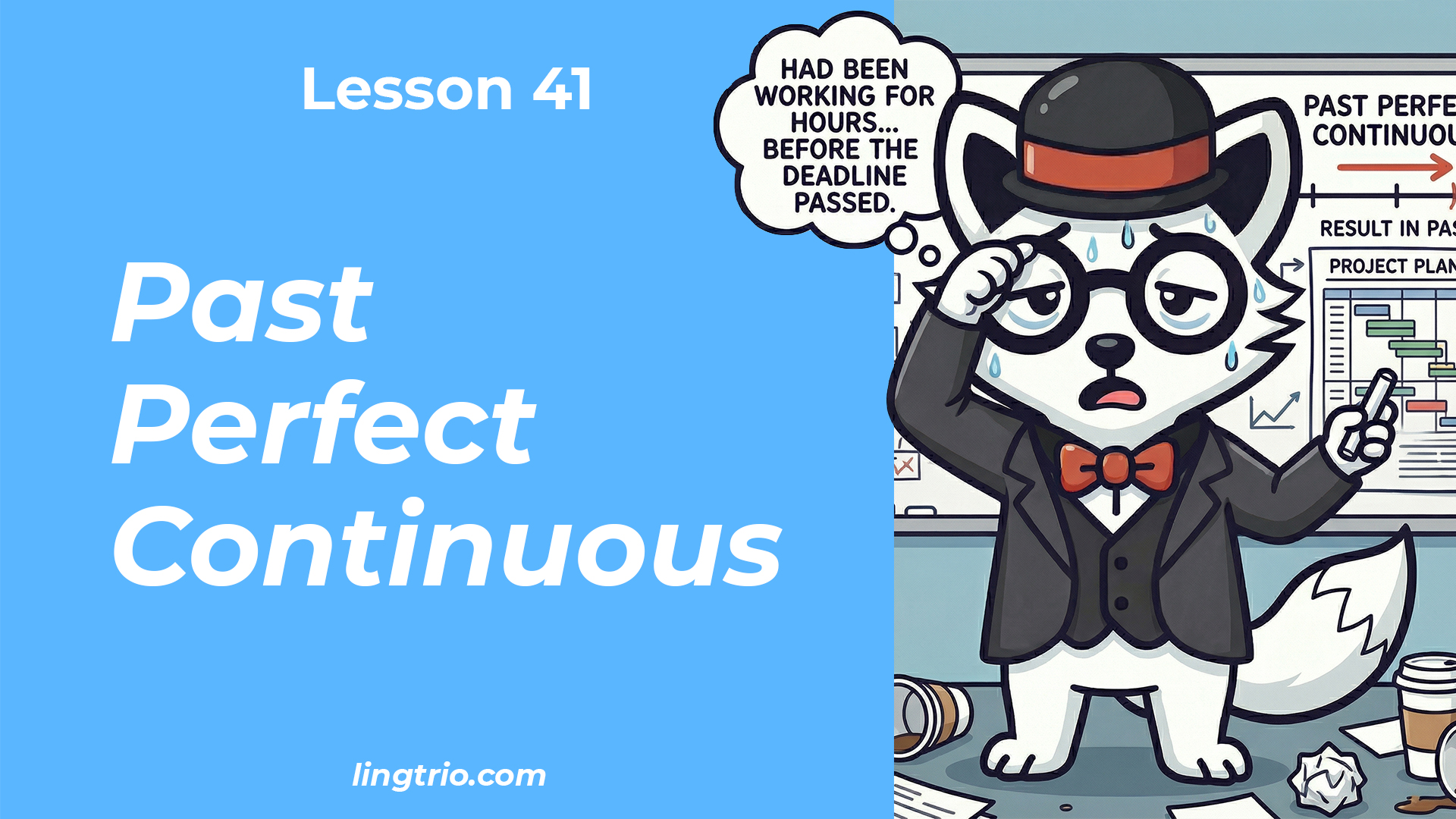 B1Lesson 41: Past Perfect ContinuousLesson 41: Past Perfect Continuous – What had been happening before? Today, we’re going to learn about another important tense: Past Perfect Continuous Why do we use Past Perfect Continuous?
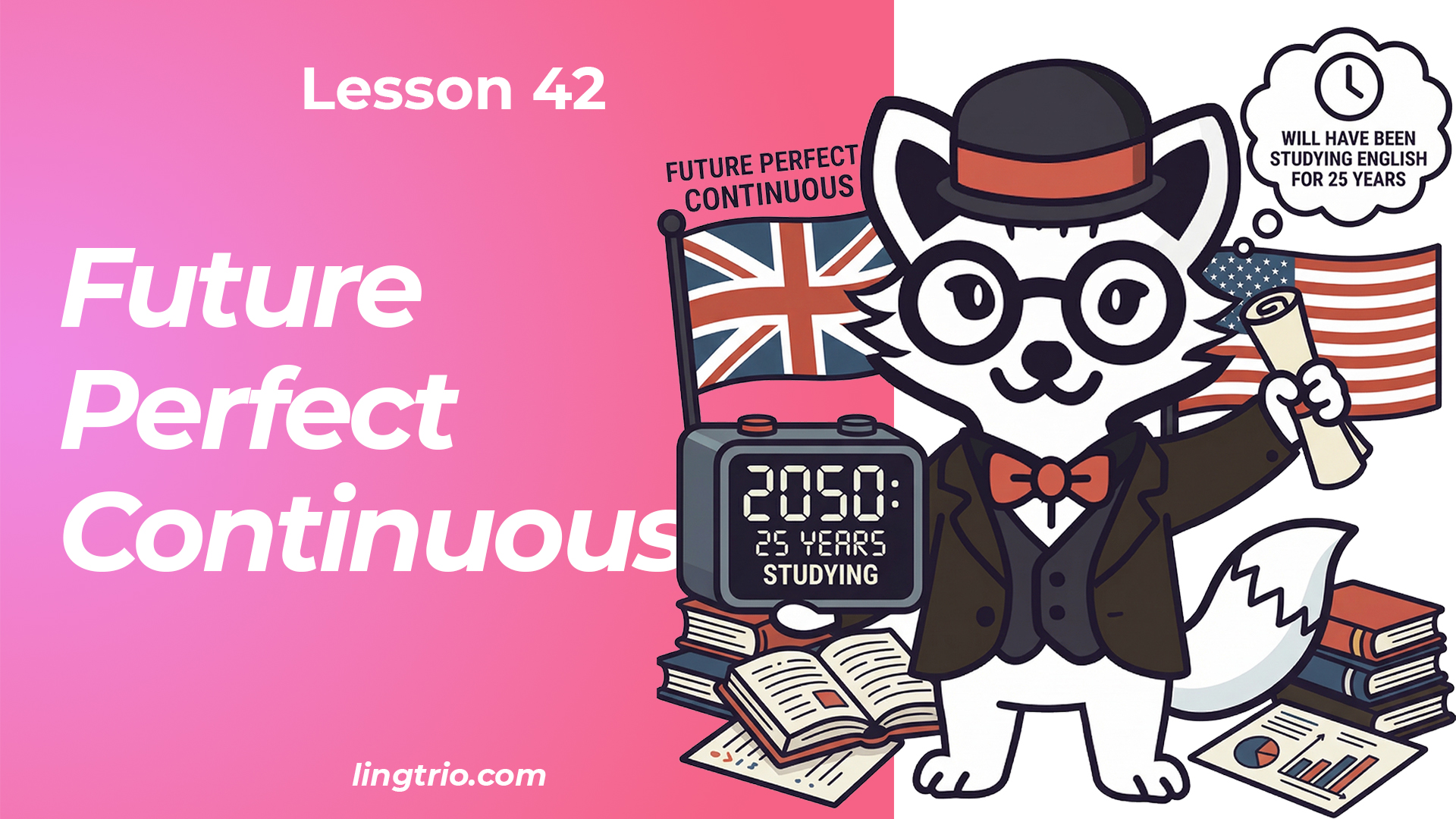 B1Lesson 42: Future Perfect ContinuousLesson 42: Future Perfect Continuous – How long will it have been happening? Welcome to Lesson 42 from LingTrio! Today, we’re going to learn another important tense: Future Perfect Continuous
 B1Lesson 43: All English TensesAll 12 Tenses with “I eat breakfast” — One idea, many meanings Today, you’ll learn how one simple idea — I eat breakfast — can be expressed in 12 different tenses with different meanings. Let’s go!
 B1Lesson 44: Question TagsToday, we’re going to learn how to make your English sound more natural with question tags. It’s easy and fun! Let’s go! What are Question Tags?
 B1Lesson 45: Should / Ought to / Had BetterLesson 45: Giving Advice – Should / Ought to / Had Better Hi! Welcome to Lesson 45 from LingTrio! Today, we’re going to learn how to give good advice in English using three easy expressions:
 B1Lesson 46: Can / Could / Be Able To — Full GuideToday, we are going to fully understand three important ways to talk about ability in English: Can, Could, and Be able to Let’s go! 1. What do they mean?