
Lo imprescindible… pero no lo de siempre
The essentials… but not the usual ones
Read with word translations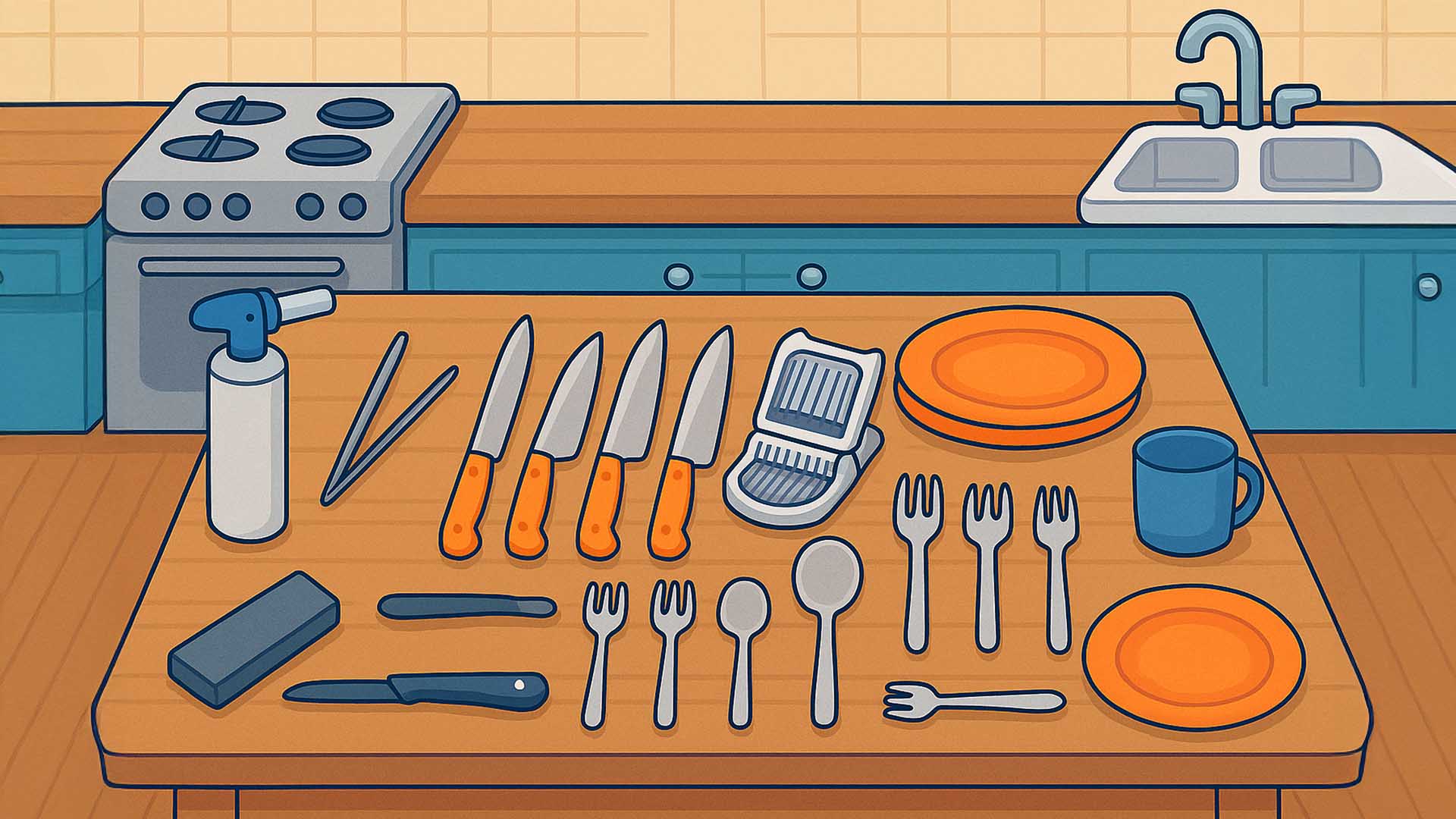
Text with translation
Lo imprescindible… pero no lo de siempre
The essentials… but not the usual ones
En toda cocina profesional hay el conjunto esperado de herramientas: cuchillos, ollas, tablas de cortar.
Every professional kitchen has the expected set of tools: knives, pots, cutting boards.
Pero las cocinas más creativas también esconden objetos que a primera vista parecen extraños — y sin embargo son indispensables en el trabajo diario.
But the most creative kitchens also hide objects that may look strange at first glance — yet are indispensable in daily work.
1. Pinzas de emplatado
1. Plating tweezers
Parecen instrumentos quirúrgicos, pero son el arma secreta del chef para colocar una hoja de albahaca exactamente donde debe ir.
They look like surgical instruments, but they are the chef’s secret weapon for placing a basil leaf exactly where it needs to be.
Algunos incluso las usan para girar suavemente piezas de pescado en la plancha sin dañar la carne.
Some even use them to gently flip pieces of fish on the plancha without damaging the flesh.
2. Mandolina japonesa
2. Japanese mandoline
No es un instrumento musical, sino una tabla con hoja ultra afilada que convierte un rábano en cintas translúcidas.
Not the musical instrument, but an ultra-sharp slicing board that turns a radish into translucent ribbons.
En el argot de cocina, “pasar por la mandolina” significa hacerlo rápido y limpio — pero los dedos distraídos corren riesgo.
In kitchen slang, “to run through the mandoline” means to do it quickly and cleanly — but careless fingers are at risk.
3. Soplete culinario
3. Culinary blowtorch
Originalmente una herramienta de taller, se ha convertido en el mejor amigo del pastelero.
Originally a workshop tool, it has become the pastry chef’s best friend.
Para caramelizar crème brûlée, dorar ligeramente un merengue o dar un toque ahumado al salmón — nada lo sustituye.
To caramelize crème brûlée, lightly brown meringue, or give smoked notes to salmon — nothing replaces it.
4. Espátula acodada
4. Offset spatula
No solo sirve para untar ganache en un pastel: en el servicio, ayuda a levantar delicadamente un filete de pescado o a alisar un puré en el plato.
It’s not just for spreading ganache on a cake: during service, it helps lift a fillet of fish or smooth a purée on the plate.
Un pequeño ángulo en la hoja cambia por completo la fluidez de los movimientos.
A small angle in the blade completely changes the fluidity of the movements.
5. Sifón
5. Siphon
Parece una botella para agua con gas, pero es la clave para mousses aireados, cremas ligeras y salsas que mantienen su forma.
It looks like a soda bottle, but it’s the key to airy mousses, light creams, and sauces that hold their shape.
A los chefs les encanta para sorprender: una salsa de parmesano en forma de nube, o un postre que se come como si fuera niebla.
Chefs love it for surprises: a parmesan sauce served as a cloud, or a dessert you eat like mist.
6. Piedra de afilar
6. Whetstone
A menudo ignorada por los aficionados, pero es fundamental: un cuchillo sin filo ralentiza a toda la brigada.
Often overlooked by amateurs, yet it’s essential: a dull knife slows down the entire brigade.
En algunas cocinas japonesas, el afilado es un ritual silencioso, casi meditativo.
In some Japanese kitchens, sharpening is a silent, almost meditative ritual.
7. Corta-huevos con hilos
7. Wire egg slicer
Rara vez se ve en grandes cocinas, pero en los restaurantes que sirven ensaladas compuestas asegura cortes rápidos y perfectamente uniformes.
Rarely seen in large kitchens, but in restaurants serving composed salads, it ensures quick and perfectly even slices.
Algunos chefs lo adaptan para cortar mozzarella o fresas.
Some chefs repurpose it for slicing mozzarella or strawberries.
8. Mortero y mano
8. Mortar and pestle
En la era de las licuadoras y procesadores, sigue siendo insustituible: un pesto hecho en mortero tiene una textura que las cuchillas de acero no pueden reproducir.
In the age of blenders and food processors, it’s still irreplaceable: pesto made in a mortar has a texture steel blades can’t replicate.
En el argot, “machacar con el mortero” significa “liberar los aceites” de hierbas y especias.
In kitchen jargon, “to crush with a pestle” means “to release the oils” of herbs and spices.
Conclusión
Conclusion
Estas herramientas pueden parecer secundarias, pero en manos de un chef se convierten en una extensión de la creatividad.
These tools may seem secondary, but in a chef’s hands they become an extension of creativity.
Recuerdan que en la cocina no solo importa el ingrediente, sino también el gesto — y a veces la herramienta menos evidente es la que marca toda la diferencia.
They remind us that in cooking, it’s not just the ingredient that matters, but the gesture — and sometimes the least obvious tool is the one that makes all the difference.
Similar stories
 B2Noche en la panaderíaNight in the BakeryNoche en la panadería La ciudad dormía, y nosotros apenas empezábamos nuestro turno.3 min
 B2Un día en la vida de un chefA Day in the Life of a ChefUn día en la vida de un chef El despertador suena a las seis de la mañana. Hoy nada de “cinco minutos más” — el servicio del mediodía nos espera.4 min
 B2Una noche gastronómica entre culturasA Gastronomic Evening Across CulturesUna noche gastronómica entre culturas11 min
 B2Guía avanzada sobre tipos de vajilla y su usoAdvanced Guide to Types of Tableware and Their UseGuía avanzada sobre tipos de vajilla y su uso En el arte culinario moderno, la elección de la vajilla desempeña un papel tan importante como la calidad de los ingredientes.4 minB2El archipiélago japonés y los desastres naturalesThe Japanese archipelago and natural disastersEl archipiélago japonés y los desastres naturales. Esta región se encuentra en la unión de varias placas tectónicas.1 minB2Naturaleza y animales de AustraliaNature and animals of AustraliaNaturaleza y animales de Australia. Este continente es conocido por un alto nivel de endemismo y un desarrollo aislado de los ecosistemas.3 min