
Vídeos en inglés con subtítulos y traducción
17 vídeos en inglés: lecciones, canciones y diálogos con subtítulos con traducción al español. Mira y aprende palabras en LingTrio.
 B1Lesson 36Lesson 36: Perfect Tense Time Words – ever, never, already, yet In the last lessons, we learned how to use the Perfect tense. Now we’ll learn four words that are very common with this tense:
 B1Lesson 37: Conditionals: What They Are and How They WorkLesson 37: Conditionals – If this... then that! Hi! Welcome to Lesson 37 from LingTrio! What are Conditionals? Conditionals are sentences with "if".
 B1Lesson 38: So / Such / Too / EnoughLesson 38: So / Such / Too / Enough – Make Your English More Emotional Hi! Welcome to Lesson 38 from LingTrio!
 B1Lesson 39: Either / Neither / BothLesson 39: either / neither / both – Agree or Disagree Naturally Hi! Welcome to Lesson 39 from LingTrio! Today, we’re going to learn how to agree or disagree in a natural way using three simple words:
 B1Lesson 40: Present Perfect ContinuousLesson 40: Present Perfect Continuous – How long has it been going on? Today, we’re going to learn a very useful tense: Present Perfect Continuous Why do we use Present Perfect Continuous?
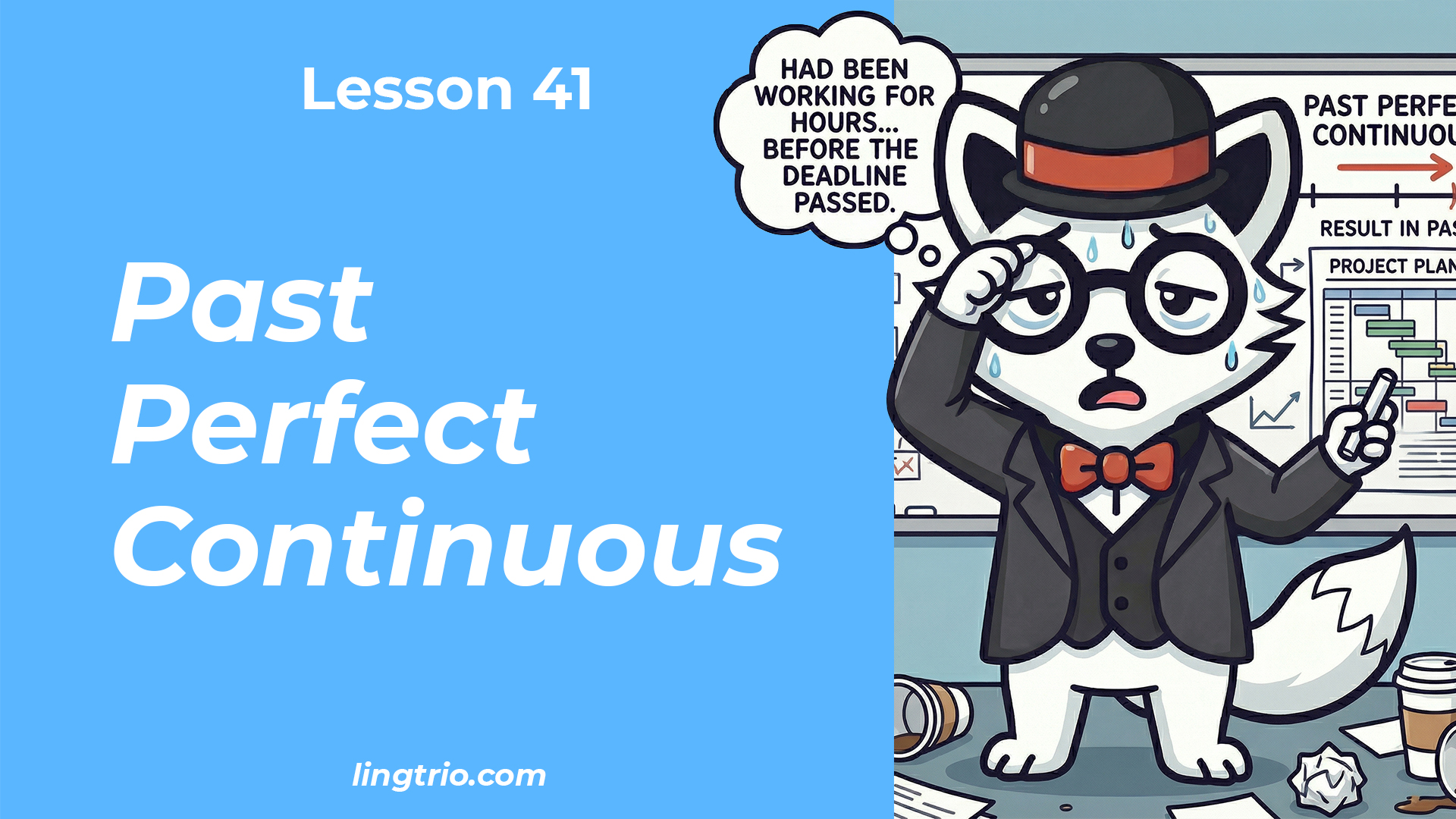 B1Lesson 41: Past Perfect ContinuousLesson 41: Past Perfect Continuous – What had been happening before? Today, we’re going to learn about another important tense: Past Perfect Continuous Why do we use Past Perfect Continuous?
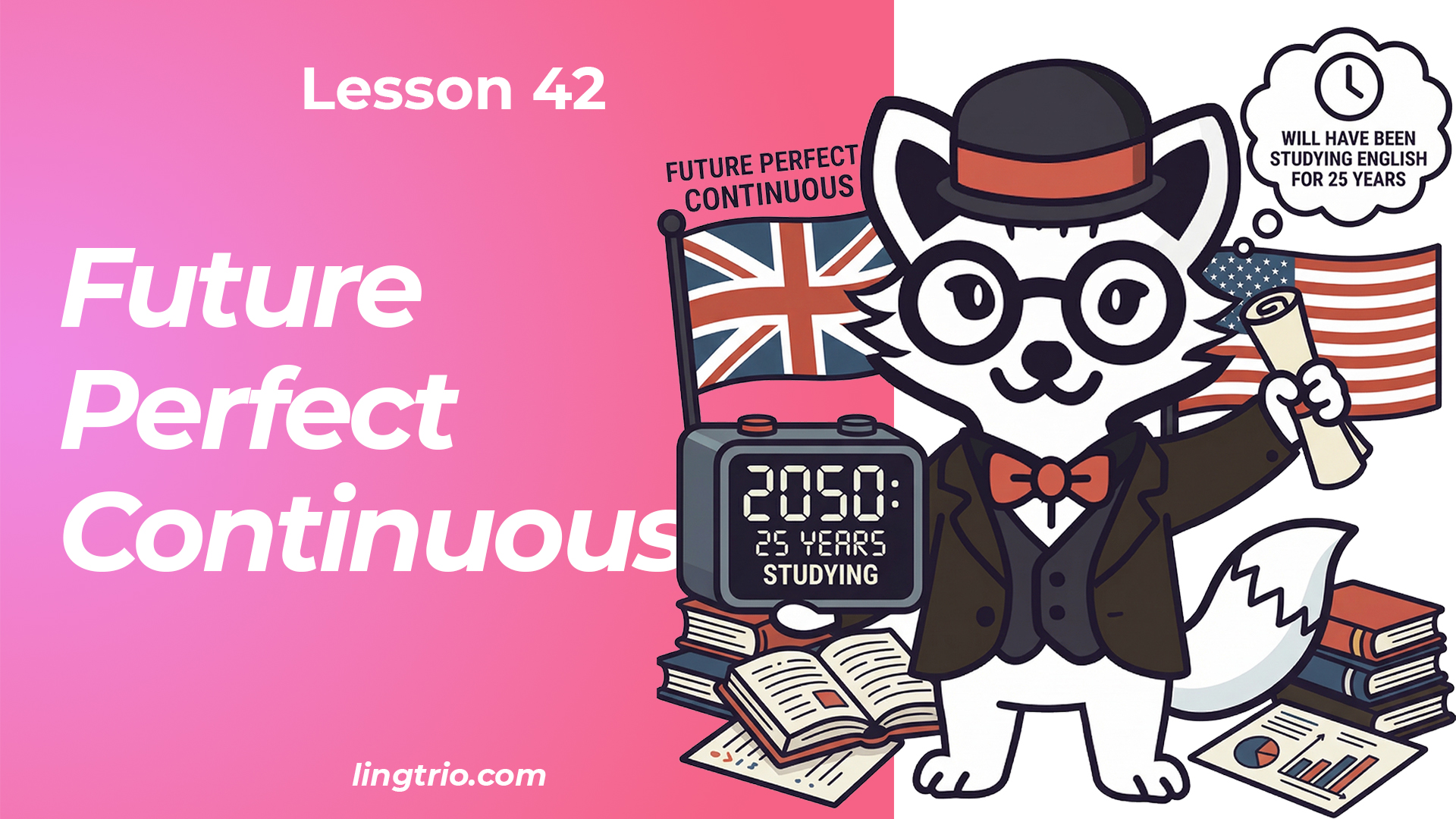 B1Lesson 42: Future Perfect ContinuousLesson 42: Future Perfect Continuous – How long will it have been happening? Welcome to Lesson 42 from LingTrio! Today, we’re going to learn another important tense: Future Perfect Continuous
 B1Lesson 43: All English TensesAll 12 Tenses with “I eat breakfast” — One idea, many meanings Today, you’ll learn how one simple idea — I eat breakfast — can be expressed in 12 different tenses with different meanings. Let’s go!
 B1Lesson 44: Question TagsToday, we’re going to learn how to make your English sound more natural with question tags. It’s easy and fun! Let’s go! What are Question Tags?
 B1Lesson 45: Should / Ought to / Had BetterLesson 45: Giving Advice – Should / Ought to / Had Better Hi! Welcome to Lesson 45 from LingTrio! Today, we’re going to learn how to give good advice in English using three easy expressions:
 B1Lesson 46: Can / Could / Be Able To — Full GuideToday, we are going to fully understand three important ways to talk about ability in English: Can, Could, and Be able to Let’s go! 1. What do they mean?
 B1Lesson 47: Passive Voice – Present and PastHi! Welcome to Lesson 47 from LingTrio! What is Passive Voice?
 B1Lesson 48: Passive Voice – Future and Perfect TensesHi! Welcome to Lesson 48 from LingTrio! In the last lesson, we already covered part of this topic. Today we will continue with Future and Perfect Tenses.
 B1Lesson 49: Reported Speech – Statements and QuestionsHi! Welcome to Lesson 49 from LingTrio! Today, we will learn about Reported Speech, focusing on Statements and Questions. What is Reported Speech
 B1Lesson 50: Reported Speech – Commands and RequestsHello Welcome to Lesson 50 of LingTrio Today we will learn how to report commands and requests in indirect speech
 B1Lesson 51: Relative Clauses – Defining and Non-definingHi! Welcome to Lesson 51 from LingTrio! Today, we’re going to learn about some important parts of sentences that help us give more information about people and things:
 B1Lesson 52: Gerunds and Infinitives – Uses and DifferencesHi! Welcome to Lesson 52 from LingTrio! Today, we’re going to learn about two important forms of verbs that help you talk about actions: Gerunds and Infinitives – Uses and Differences